

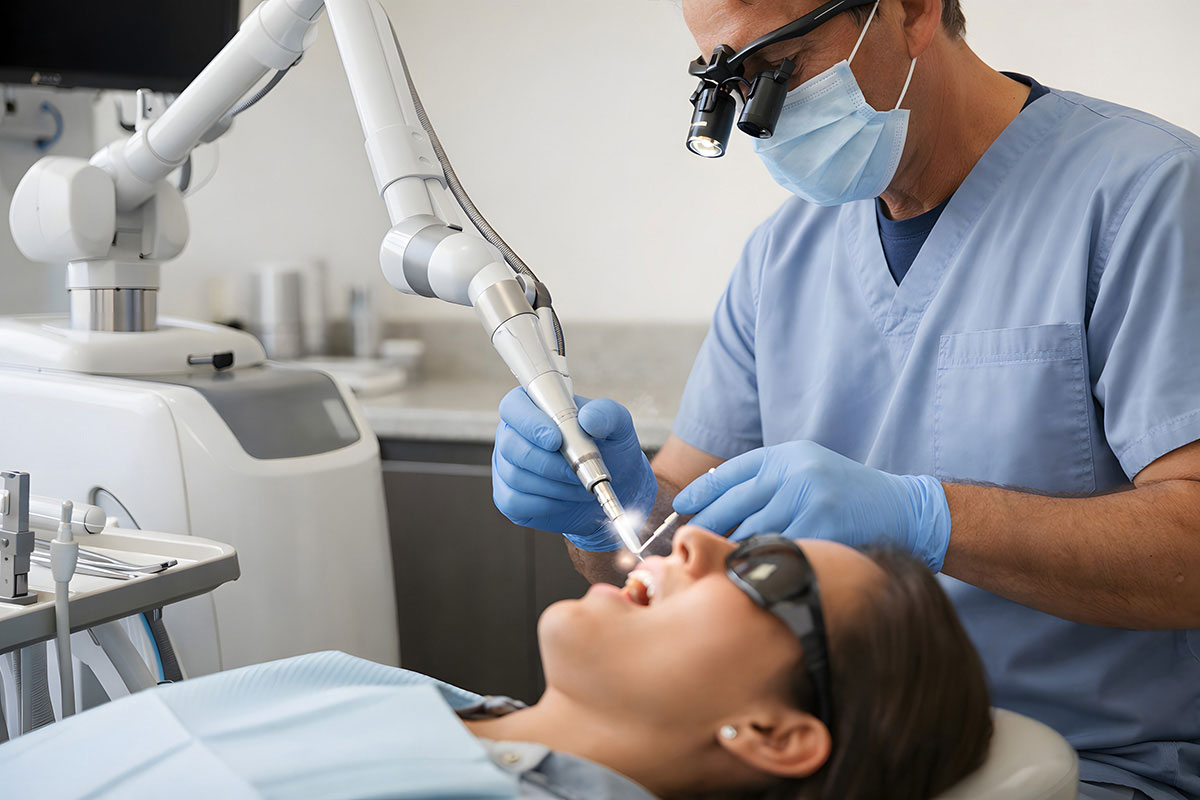
Sometimes a tiny band of tissue can create a surprisingly big problem. A tight attachment under the tongue can affect movement. A strong tissue pull between the upper lip and gums can contribute to spacing or gum irritation. When these small attachments limit normal function or create dental concerns, a frenectomy may be recommended. This simple procedure removes or adjusts the tight tissue so the mouth can move more freely and comfortably.
Dogwood Dental provides periodontal and oral soft tissue care, and patients can learn more through the frenectomy service page. A frenectomy may be helpful for children, teens, or adults depending on the location of the tissue and the symptoms it is causing.
What a Frenectomy Is
A frenum is a small band of tissue that connects one part of the mouth to another. You have one under the tongue and others connecting the lips to the gums. In many people, these tissues do not cause any problems. But when a frenum is too tight, too short, or attached in a way that pulls on the gums, a frenectomy may help.
A frenectomy is a minor procedure that releases or removes the restrictive tissue. The goal is to improve movement, reduce pulling, or support better oral function. The procedure is usually quick, and the treatment plan depends on the patient’s age, symptoms, and oral health needs.
There are two common types: lingual and labial. A lingual frenectomy addresses the tissue under the tongue. A labial frenectomy addresses tissue between the lip and gums, most often near the upper front teeth.
When a Lingual Frenectomy May Be Recommended
A lingual frenum is the tissue under the tongue. If it is too tight, it may limit tongue movement. This is often called tongue-tie. In babies, a tight lingual frenum may affect feeding. In children or adults, it can sometimes affect speech, oral hygiene, swallowing, or tongue comfort.
A lingual frenectomy may be considered when tongue movement is restricted and the restriction is contributing to real functional concerns. Not every tongue-tie needs treatment, so evaluation matters. Your dentist can help determine whether the tissue is actually limiting function.
For some patients, therapy or exercises may also be part of the plan before or after a frenectomy. The goal is not only to release tissue, but also to support better movement and function afterward.
When a Labial Frenectomy May Be Recommended
A labial frenum connects the lip to the gum tissue. Sometimes this tissue attaches low between the upper front teeth. In certain cases, it can contribute to a space between the teeth, pull on the gums, or make orthodontic stability more difficult.
A labial frenectomy may be recommended if the tissue causes gum pulling, irritation, or spacing concerns. Timing is important. For children or teens, your dentist may coordinate the timing with orthodontic treatment if tooth alignment is involved.
In adults, a labial frenum that pulls on the gums may contribute to recession or discomfort. A professional evaluation helps determine whether a frenectomy is the right choice or whether another periodontal treatment is needed.
What to Expect During a Frenectomy
A frenectomy is typically performed with local anesthesia to keep the area comfortable. The tissue is released or removed carefully. Depending on the technique used, stitches may or may not be needed. Your dentist will explain the approach before treatment so you know what to expect.
The procedure is usually shorter than many patients imagine. Afterward, mild tenderness or swelling can occur, but many patients recover quickly with clear home care instructions. Soft foods and gentle cleaning may be recommended for a short time.
Follow-up care is important. Your dentist may check healing and confirm that the tissue is not restricting movement or pulling on the gums. In some cases, stretching or movement exercises may be recommended to support the best outcome after a frenectomy.
Frenectomy for Children and Adults
A frenectomy can be helpful at different ages, but the reason for treatment may vary. For infants, the concern may involve feeding. For children, it may involve speech, oral habits, tooth spacing, or gum tissue pull. For teens, orthodontic planning may be part of the conversation. For adults, treatment may relate to gum recession, discomfort, speech, or oral function.
The most important step is diagnosis. A tight frenum alone does not always mean treatment is needed. The question is whether the tissue is causing a problem or increasing risk. A careful exam helps answer that question.
Benefits of Frenectomy
- Improved tongue movement: A lingual frenectomy can help release restricted tissue under the tongue.
- Better oral function: Treatment may support easier speaking, swallowing, cleaning, or movement depending on the patient’s needs.
- Reduced gum pulling: A labial frenectomy can reduce tension where the lip tissue pulls on the gums.
- Support for orthodontic stability: In some cases, releasing a tight frenum may help support long-term tooth spacing results.
- Comfortable soft tissue care: The procedure is typically simple and performed with numbing for comfort.
- Helpful for multiple ages: Children, teens, and adults may benefit when tissue restriction causes functional or dental concerns.
- Personalized treatment planning: A professional evaluation helps determine whether a frenectomy is truly needed.
Healing After a Frenectomy
Healing instructions are usually simple. Keep the area clean, follow eating guidelines, and avoid irritating the site while it heals. If exercises are recommended, complete them as directed. These exercises may help prevent tight healing and support better movement.
Call your dental team if you notice increasing pain, unusual swelling, bleeding that does not slow, or signs of infection. Most healing concerns are manageable when addressed early.
A Small Tissue Change Can Support Better Comfort
A tight frenum may be small, but it can affect how the tongue, lips, gums, and teeth function. A frenectomy can help when that tissue creates movement limits, gum pulling, spacing concerns, or other oral health issues. With careful evaluation and a personalized treatment plan, this minor procedure can make daily function feel easier.
If you or your child may benefit from a frenectomy, contact Dogwood Dental at (770) 926-6886 to schedule your consultation at 2421 Shallowford Rd Suite 146, Marietta, GA 30066, or book an appointment to discuss comfortable soft tissue treatment options.