

The success of a dental implant begins long before the replacement tooth becomes visible. It starts with careful planning, healthy supporting tissues, and a healing process that allows the implant to become firmly connected to the jawbone. For patients considering treatment, understanding dental implant placement can make the experience easier to approach. Knowing what happens during surgery, what recovery feels like, and how to protect the healing area can turn an unfamiliar procedure into a clear treatment plan.
At Dogwood Dental’s dental implant placement service in Marietta, GA, treatment focuses on replacing missing teeth with stable support designed for long-term function. Dr. Jacobs and the dental team can evaluate whether implants are suitable for an individual’s oral health and help patients understand the stages involved in restoring their smiles.
Understanding Dental Implant Placement
Dental implant placement involves positioning a small implant, usually made from titanium or another biocompatible material, into the jawbone. The implant acts as a replacement tooth root and provides support for a crown, bridge, or implant-supported denture.
Unlike a removable tooth replacement, an implant is intended to become a stable part of the supporting structure beneath the gums. This stability develops through a healing process in which bone forms a close connection with the implant surface.
Placing an implant is not the same as receiving the final replacement tooth. In many cases, there is a healing period between surgery and attaching the finished restoration.
The exact sequence depends on bone quality, gum health, the location of the missing tooth, and whether other procedures are needed.
What Happens Before Implant Surgery?
A successful procedure starts with a thorough evaluation. Your dentist will review your medical history, medications, existing dental conditions, and goals for replacing missing teeth.
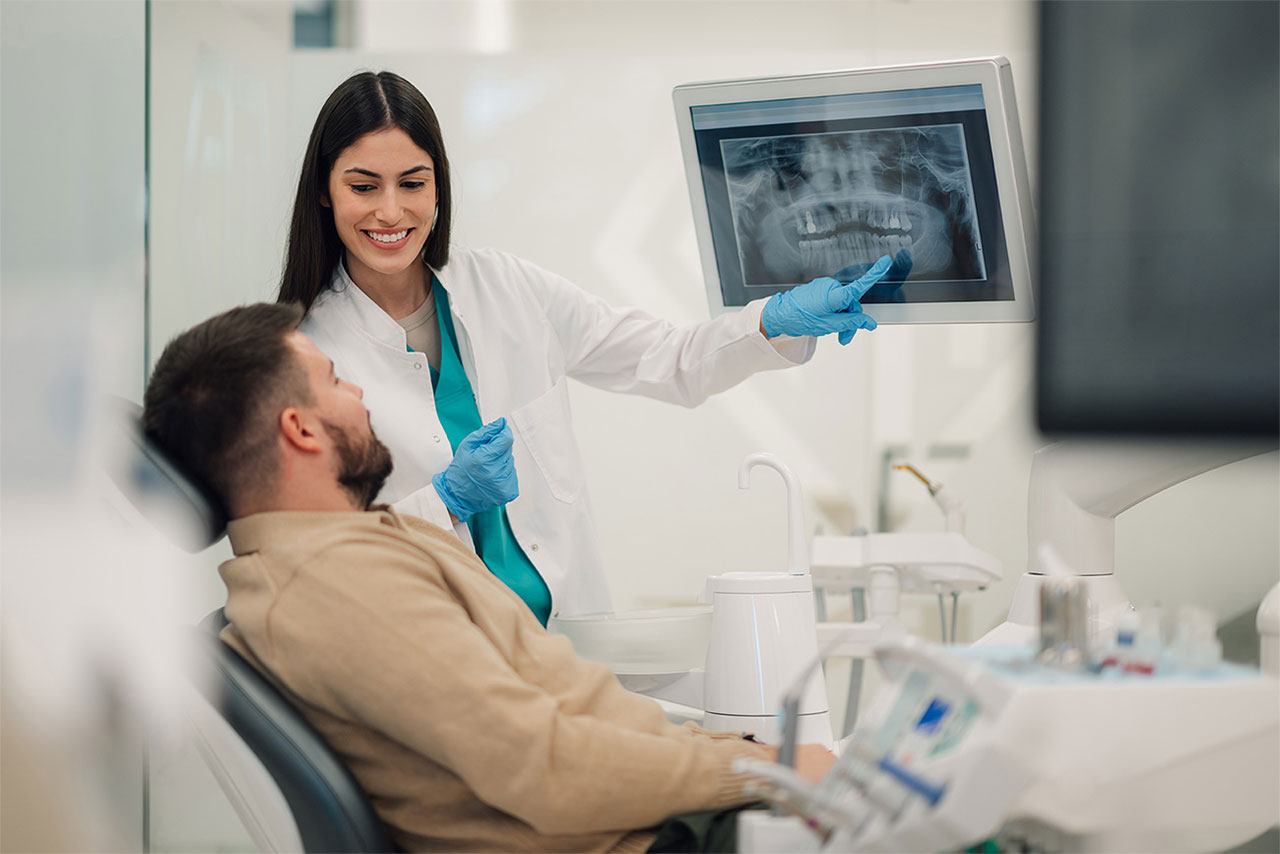
Dental imaging is an important part of planning. X-rays and, when indicated, three-dimensional scans help show the height and width of available bone, nearby tooth roots, and important structures within the jaw.
The dentist also checks your bite. This matters because the implant will eventually support a tooth or larger restoration that must handle chewing forces comfortably.
If gum disease or an active infection is present, those issues may need treatment before implant surgery. Healthy tissues improve the conditions needed for healing.
Some patients have sufficient bone for immediate planning. Others may need bone grafting or additional preparation to create stronger support.
These early steps are important because dental implant placement should be based on a specific plan, not simply on the location of an empty space.
How to Prepare for Dental Implant Placement
Once treatment is scheduled, the dental team provides instructions based on the procedure and the patient’s health history.
Ask which medications to continue and whether any require special consideration. Never stop prescription medication unless the appropriate healthcare professional instructs you to do so.
If sedation is planned, you may need to avoid eating or drinking for a specific period and arrange transportation home. These instructions differ depending on the sedation method.
It is also helpful to prepare your kitchen before surgery. Having yogurt, scrambled eggs, mashed potatoes, soups served at a comfortable temperature, and other soft foods available can make the first days of healing easier.
Patients should avoid smoking and vaping during healing because nicotine and other tobacco-related effects can interfere with blood flow and increase the risk of implant complications.
Plan enough time for recovery, especially if you expect a more involved procedure or multiple implants.
What Happens During Dental Implant Placement?
Making the Area Comfortable
The treatment area is numbed with local anesthesia. Patients may feel pressure or movement during the procedure, but they should not experience sharp pain.
Depending on the treatment plan, sedation may also be available or recommended. Your dentist will explain what level of comfort support is appropriate.
Preparing the Implant Site
The dentist carefully prepares a space in the jawbone for the implant. Its position and angle are planned to support the future replacement tooth and avoid important nearby structures.
The implant is then placed into the prepared area. Depending on the situation, a small healing component or protective cover may be attached.
Protecting the Surgical Area
The gum tissue is positioned around or over the site as needed. Stitches may be used in some cases.
Before the appointment ends, the dental team reviews instructions for bleeding control, eating, cleaning, medication use, and follow-up care.
The surgical portion may be shorter than expected for some patients, but the time required varies with the number of implants and complexity of the case.
What to Expect During the First 24 Hours
Mild bleeding, swelling, and tenderness may occur after implant surgery. The degree of discomfort varies, and patients should follow the specific instructions provided by their dental team.
Rest is usually helpful during the first day. Avoid vigorous physical activity, especially if it increases bleeding or throbbing.
Cold compresses applied to the outside of the face may help manage swelling when recommended.
Choose soft foods and avoid chewing directly on the surgical area. Drink enough water, but avoid using straws if your dentist instructs you to do so.
Do not poke the area with your tongue or fingers. Repeatedly checking the site can irritate the healing tissues.
If medication is prescribed or recommended, take it exactly as directed. Contact the dental office if bleeding is persistent, pain is unusually severe, or concerning symptoms develop.
Why Healing Time Matters So Much
After dental implant placement, the surrounding bone needs time to heal around the implant. This process is known as osseointegration.
It may take several months, depending on the implant location, bone condition, overall health, and treatment approach.
During healing, the implant should be protected from excessive force. A temporary restoration may be possible in some situations, but it must be planned carefully.
Patients should not assume that receiving a temporary tooth means the implant is ready for normal heavy chewing.
Follow-up visits allow the dentist to assess healing before moving forward with the permanent crown, bridge, or denture.
Benefits of Careful Dental Implant Placement
- Stable support: Properly positioned implants provide a foundation for replacement teeth.
- Natural chewing function: Implant-supported restorations can help restore comfortable biting and chewing.
- Protection for neighboring teeth: A single implant often avoids the need to reshape healthy teeth for a traditional bridge.
- Jawbone support: Implants can help reduce bone loss in the area of a missing tooth.
- Flexible restoration options: Implants may support individual crowns, bridges, or certain dentures.
- Customized planning: Dental imaging and clinical evaluation help guide implant position and treatment timing.
- Long-term potential: With healthy tissues, good home care, and professional maintenance, implants can function for many years.
When Should You Contact the Dentist During Recovery?
Some swelling and tenderness are expected after surgery, but symptoms should generally improve as healing progresses.
Contact the dental office if pain becomes significantly worse, bleeding does not respond to the recommended measures, swelling increases unexpectedly, or the area develops unusual drainage or a persistent bad taste.
Fever and increasing facial swelling also deserve prompt evaluation.
Seek urgent medical attention for difficulty breathing, difficulty swallowing, or rapidly spreading facial swelling.
Patients should never attempt to tighten or adjust implant components themselves. If something feels loose or unstable, the dental team should evaluate it.
How to Care for Dental Implants Long Term
Once healing is complete, implants still require regular care. Although the implant and restoration cannot develop cavities, the surrounding gums and bone can become inflamed or infected.
Brush twice daily, clean around the restoration every day, and follow professional recommendations for floss or other cleaning tools.
Keep regular dental appointments so the dentist can monitor bone levels, gum health, bite forces, and the condition of implant components.
If you grind your teeth, a night guard may be recommended to protect the restoration.
Avoid chewing ice or using implant-supported teeth to open packaging. These habits can damage the visible restoration even when the implant itself remains stable.
Frequently Asked Questions About Dental Implant Placement
Is dental implant placement painful?
Local anesthesia is used to numb the treatment area. Some pressure may be felt during surgery, and temporary tenderness afterward is common.
How long does a dental implant take to heal?
Bone healing often takes several months, although the timing varies by patient and treatment plan.
Can I eat normally after implant surgery?
Patients usually begin with soft foods and avoid chewing on the surgical area. Normal eating is resumed according to the dentist’s instructions.
Will I receive a tooth on the same day?
Some patients may receive a temporary restoration, but others need a healing period first. The decision depends on implant stability and clinical conditions.
Preparing for a Stronger, Healthier Smile
Dental implant placement is an important part of rebuilding a missing tooth or larger section of a smile. Careful planning, proper surgical technique, patient cooperation, and healing all contribute to long-term success.
Understanding the procedure helps patients prepare for recovery and follow the instructions that protect their investment. A personalized consultation is the best way to determine whether implant treatment fits your needs.
Ready to discuss dental implant placement in Marietta, GA? Contact Dogwood Dental at (770) 926-6886 to schedule a consultation with Dr. Jacobs at 2421 Shallowford Rd Suite 146, Marietta, GA 30066, and explore a treatment plan for a stronger, more complete smile.