

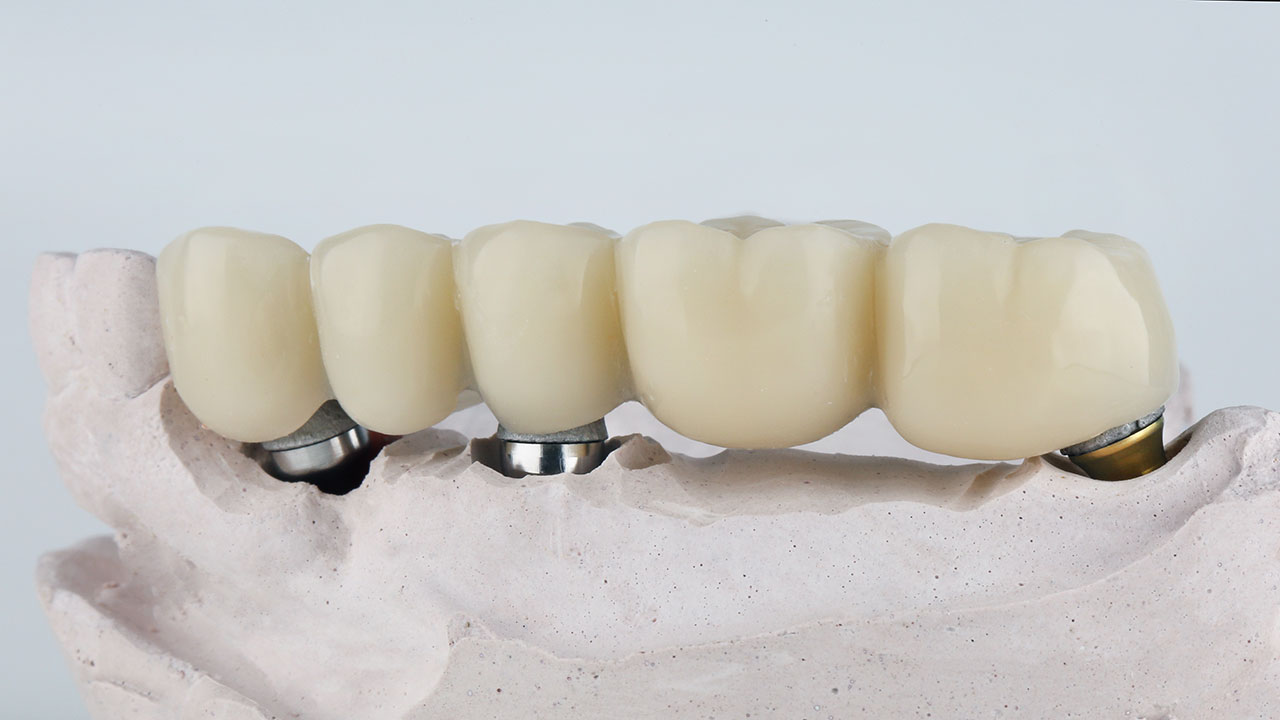
When several teeth are missing in a row, the gap can affect far more than your smile. Chewing may feel uneven, speech may change, and the teeth near the space can slowly move out of position. It can feel like a missing section in a fence, one opening that weakens the whole line. Implant bridges are designed to rebuild that missing section with strong support from dental implants, creating a fixed replacement that can feel secure and natural.
Patients can learn more about implant-based tooth replacement through Dogwood Dental’s dental implants service page. Implant bridges can be a strong option when multiple teeth are missing and a patient wants a fixed solution without placing one implant for every missing tooth.
What Implant Bridges Are
Implant bridges replace multiple missing teeth using dental implants for support. Instead of relying on natural teeth as anchors, the bridge is supported by implants placed in the jawbone. This makes the restoration more stable and helps avoid placing extra stress on nearby teeth.
A traditional bridge often uses crowns on the teeth beside the gap. That can work well in many cases, especially if those teeth already need crowns. But when neighboring teeth are healthy, some patients prefer implant bridges because the surrounding teeth do not need to be reshaped for support.
An implant bridge usually includes two or more implants and a connected set of replacement teeth. The number of implants depends on the size of the gap, the bone support, the bite, and the location in the mouth.
Why Several Missing Teeth Should Be Replaced
Missing teeth are not just a cosmetic issue. When several teeth are gone, chewing pressure shifts. You may start chewing mostly on one side, which can overload certain teeth. The teeth near the gap may drift or tilt. The opposing teeth may move because they no longer have teeth to meet when biting.
Over time, these changes can create bite problems, jaw strain, food traps, and uneven wear. Implant bridges help restore the missing chewing surface and support a more balanced bite.
Replacing missing teeth can also help with nutrition. Patients with several missing teeth may avoid foods that require more chewing, such as crisp fruits, vegetables, and certain proteins. With a more stable replacement, eating can become more comfortable and less limited.
How Implant Bridges Work
The process begins with a detailed exam. Your dentist will review the missing tooth area, gum health, bone levels, and overall bite. Imaging helps determine where implants can be placed safely and effectively.
If the jawbone has enough support, implants can be placed in the planned positions. These implants act like artificial tooth roots. After placement, they need time to heal and bond with the bone. This healing process is what gives implant bridges their secure foundation.
Once healing is complete, the bridge is designed and attached to the implants. The replacement teeth are shaped to fit your bite and blend with your smile. A carefully designed implant bridge should feel stable when chewing and natural when speaking.
Implant Bridges vs. Removable Partial Dentures
Removable partial dentures can replace several missing teeth and may be a practical option for many patients. However, they come out for cleaning and may move slightly during eating or speaking. Some patients are comfortable with that, while others want a fixed option.
Implant bridges stay in place and are supported by implants. Many patients like the secure feel and do not want to remove their teeth at night. Implant support can also help reduce pressure on the gums compared with a removable appliance.
The right choice depends on your health, budget, bone support, and personal goals. A dentist can explain the pros and limits of each option so you can choose what fits your life.
Who May Be a Good Candidate for Implant Bridges?
You may be a candidate for implant bridges if you are missing several teeth in a row and want a fixed replacement. Healthy gums are important because implant success depends on clean, stable tissues around the implants. Enough bone support is also needed, although some patients may still qualify after bone grafting or other preparation.
Overall health matters too. Some medical conditions, medications, and habits like smoking can affect healing. These factors do not always prevent treatment, but they need to be discussed during the consultation.
A good candidate for implant bridges is also willing to maintain the bridge properly. Implants cannot get cavities, but the gums and bone around them can develop inflammation if plaque builds up. Daily cleaning and regular visits are essential.
Benefits of Implant Bridges
- Replaces multiple missing teeth: Implant bridges can restore several teeth without needing one implant for every missing tooth.
- Fixed stability: The bridge stays in place and does not need to be removed like a partial denture.
- Protects nearby teeth: Implant support often avoids reshaping healthy neighboring teeth for crowns.
- Improved chewing strength: A secure foundation can make eating feel easier and more natural.
- Supports bite balance: Filling the gap helps reduce shifting and uneven chewing pressure.
- Natural appearance: The bridge is designed to blend with your smile’s shape and shade.
- Long-term value: With good care, implant bridges can be a durable solution for missing teeth.
How to Care for Implant Bridges
Caring for implant bridges requires consistency. You will brush twice a day and clean around the bridge and implants daily. Your dental team may recommend special floss, a water flosser, or small brushes to clean under and around the bridge.
Regular checkups are also important. Your dentist will check gum health, bite pressure, and the condition of the restoration. If you grind or clench your teeth, a night guard may be recommended to protect the bridge and implants from heavy force.
Good maintenance helps keep implant bridges stable, comfortable, and healthy for the long term.
A Stronger Replacement for a Larger Gap
Several missing teeth can change how your mouth works, but you do not have to accept loose, uncomfortable, or unstable chewing. Implant bridges offer a fixed, implant-supported way to replace multiple teeth and restore confidence in your bite. With careful planning and steady maintenance, they can help you eat, speak, and smile with greater comfort.
Ready to find out whether implant bridges are right for you? Contact Dogwood Dental at (770) 926-6886 to schedule your consultation at 2421 Shallowford Rd Suite 146, Marietta, GA 30066, or book an appointment to explore a secure solution for replacing missing teeth.